You’ve probably noticed it. Those clean, boxy houses popping up in neighborhoods that used to be all traditional colonials and craftsman homes. Modern design isn’t just for architects and their fancy magazine spreads anymore. It’s everywhere.
And here’s the thing: people used to think modern homes were cold. Too minimal. Too different. But that’s changing fast.
Why Modern Design Is Taking Over
Let me tell you what’s actually happening. More homeowners are choosing modern designs because they finally get what modern architecture is really about. It’s not about being weird or showing off. It’s about living better.
Modern homes make sense. Big windows bring in natural light. Open floor plans let families actually be together while doing different things. Clean lines mean less visual clutter, which honestly makes your brain feel calmer.
How We Actually Live Now
Plus, modern design works really well with how we actually live now. We’re home more. We work from home. We need spaces that do multiple things. Modern layouts handle this better than traditional designs that were made for a completely different lifestyle.
According to the National Association of Home Builders, which represents over 140,000 members in the residential construction industry, modern design principles have become increasingly important in meeting contemporary homeowner needs.
What Makes a Home “Modern”
So what are we talking about here? Modern design has some key features:
Clean lines and simple forms. No fussy trim work or unnecessary decoration. Everything has a purpose.
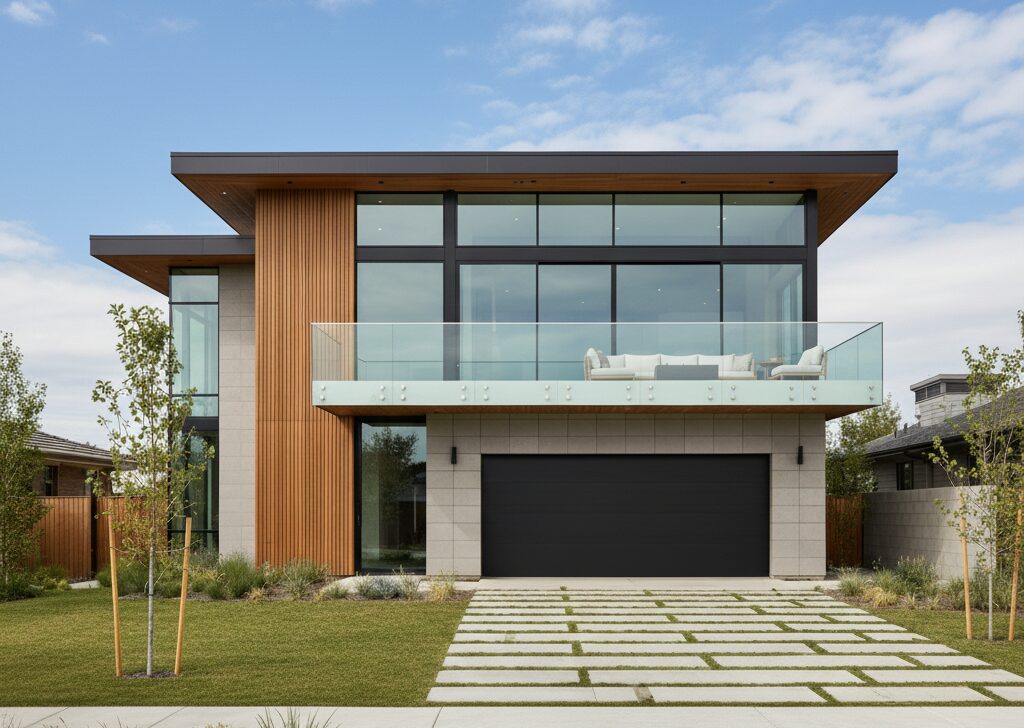
Large windows and natural light. This is huge. Modern homes are built around bringing the outside in. Floor-to-ceiling windows aren’t just for views. They change how a space feels.
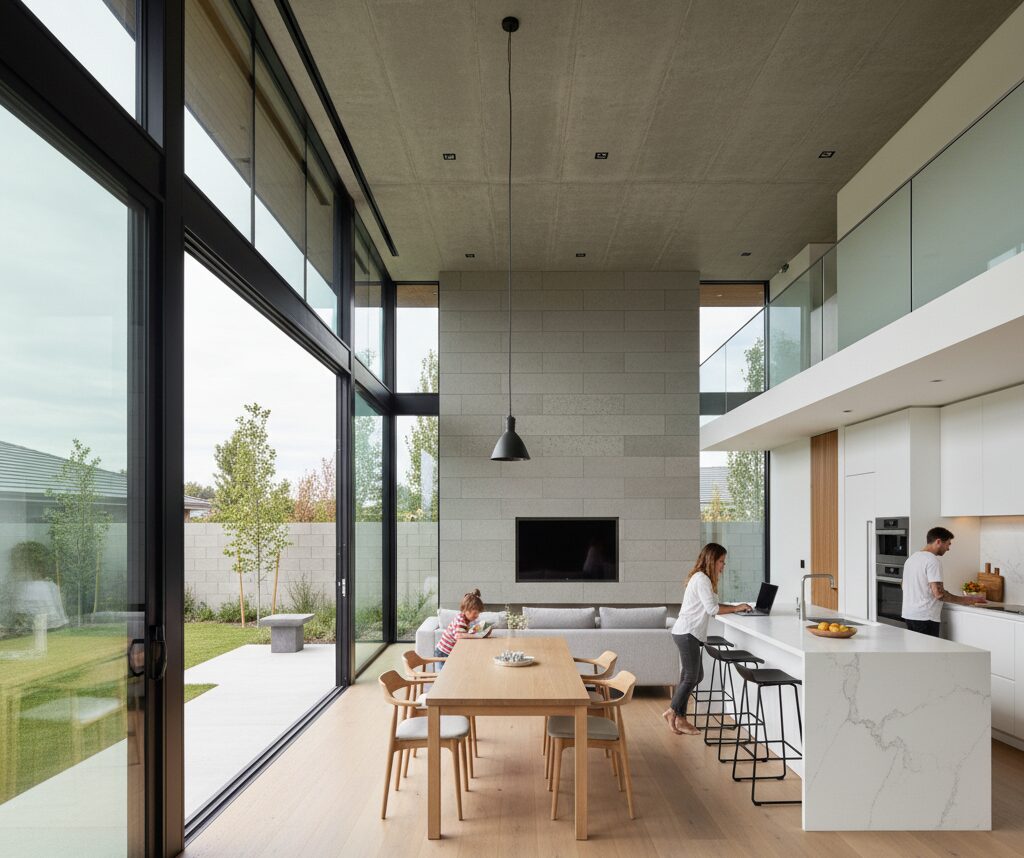
Open floor plans. Walls between kitchen, dining, and living areas? Gone. This creates flow and makes homes feel bigger than they are.
Mixed materials. Modern doesn’t mean boring. You’ll see wood, metal, glass, and concrete used together. The contrast actually makes each material look better.
Flat or low-slope roofs. This is the most obvious visual difference from traditional homes. Some people love it, some hate it. But it definitely makes a statement.
Connection to outdoor spaces. Modern homes blur the line between inside and outside. Big sliding doors, outdoor living areas that feel like extensions of the interior.
The modern architecture movement emerged in the 20th century based on new technologies and the principle that form should follow function, embracing minimalism and rejecting unnecessary ornament.
The Cost Reality
Here’s what you need to know about budget. Modern homes can cost more than traditional builds. But not always, and not for the reasons you might think.
Those big windows? Expensive. Custom metal railings and specialty materials? Also expensive. But the simple, clean design can actually save money in other ways. Less decorative trim means less labor. Straightforward rooflines are easier to build than complex traditional roofs.
Getting Quality Without Breaking the Bank
The real cost comes from doing it right. A modern home that looks cheap is worse than a traditional home that looks cheap. The minimal design means everything shows. Every detail matters. You can’t hide bad craftsmanship behind ornate molding.
But you can build modern on a budget. You just need to be smart about where you spend and where you save.
Inside Modern Living Spaces
Walk into a well-designed modern home and you’ll notice something immediately. Space flows. You can see from the front door through to the back yard. The kitchen isn’t tucked away in a separate room.
This open concept thing isn’t just trendy. It changes how families interact. Parents can cook while kids do homework at the island. Someone can watch TV while someone else reads, and you’re still in the same space.
The minimalist approach means you need less stuff, or at least less visible stuff. Storage becomes really important. Modern homes often have tons of hidden storage. Cabinets that look like walls. Drawers built into staircases. Everything has a place.
Kitchens in modern homes tend to be showpieces. Clean, flat-front cabinets. Waterfall-edge countertops. Integrated appliances. It’s a style that works whether you’re a serious cook or just heating up takeout.
Energy Efficiency and Smart Design
Here’s something most people don’t realize right away. Modern homes are often more energy efficient than traditional ones.
All those windows I mentioned? They’re usually high-performance, with coatings and multiple panes that keep heat in or out. The simple building envelope is easier to insulate properly. Flat roofs make solar panels way more practical.
Modern design also tends to be more thoughtful about sun orientation. Where are windows placed to get morning light but avoid harsh afternoon sun? How does air flow through the house naturally?
Smart home technology fits naturally into modern design too. Clean walls and minimal decoration mean you’re not trying to hide thermostats and switches among crown molding. Everything can be integrated smoothly.
Regional Adaptations
Modern design isn’t one-size-fits-all. What works in Southern California looks different from what works in Vermont.
In warm climates, modern homes often feature outdoor living spaces as main areas, not afterthoughts. Covered patios, outdoor kitchens, pool areas that flow seamlessly from interior spaces.
In cold climates, modern design adapts with different priorities. Smaller windows on north-facing walls. Deeper overhangs to manage snow. Materials that handle freeze-thaw cycles.
And modern design can respect local building traditions while still feeling contemporary. You can have clean lines and modern sensibility while using regional materials or acknowledging local architectural history.
The Challenges
Let’s be honest about the downsides. Modern homes aren’t for everyone.
Some neighborhoods have rules that make modern builds difficult or impossible. HOAs with strict design guidelines. Historic districts. Areas where your modern box will stick out like a sore thumb.
Resale and Maintenance
Resale can be tricky. Modern homes often appeal strongly to some buyers and not at all to others. There’s less middle ground than with traditional styles. This is changing as modern becomes more mainstream, but it’s still a consideration.
Maintenance can be different too. Those clean lines show dirt and weathering more than textured traditional materials. Large windows need cleaning. Flat roofs need proper drainage and maintenance.
Working with Architects and Builders
If you’re serious about building modern, you need the right team. Not every builder gets modern design. The construction techniques are different. The attention to detail required is different.
Look for architects who specialize in modern residential design. Check their portfolios. Make sure their style matches what you want. Modern design has subcategories too. Mid-century modern, contemporary, minimalist, industrial. They’re all different.
The American Institute of Architects, which represents over 100,000 licensed architects and design professionals, offers resources to help you find qualified architects in your area who specialize in modern design.
Talk to builders who have actually built modern homes. Ask to see their work. Talk to their previous clients. Building modern well requires understanding that every joint, every transition, every material choice is visible.
Building Modern Homes
At RP Construction, we specialize in building modern homes throughout Oregon. We’ve seen firsthand how modern design works particularly well in the Pacific Northwest.
Oregon’s natural beauty practically demands the kind of indoor-outdoor connection that modern design does best. Large windows that frame views of mountains, forests, or coast. Covered outdoor spaces that let you enjoy the scenery even on rainy days. Materials like wood and stone that connect the home to its surroundings.
Why Modern Works in Oregon
The climate here also makes modern design practical. Those big south-facing windows? They bring in light during gray winter months and can be shaded in summer. The simple rooflines handle our rain better than complex traditional roofs with lots of valleys where water and debris collect.
Our Approach
When we work with clients on modern projects, we focus on getting the details right. The clean lines that define modern design mean there’s nowhere to hide mistakes. Every window placement matters. Every material transition needs to be thought through.
We also understand that modern doesn’t have to mean stark or cold. Oregon homeowners want warmth and comfort. So we incorporate natural materials, thoughtful lighting, and spaces that feel inviting while still maintaining that modern aesthetic.
If you’re thinking about building a modern home in Oregon, we’d love to talk with you about what’s possible on your site and within your budget.
Making It Work for Your Family
The big question is whether modern design fits how you actually live. Some things to think about:
Do you like minimal spaces or does that feel cold to you? Modern homes require discipline about clutter. Everything visible should look good or go away.
How much privacy do you need? Open floor plans mean less separation between activities. Some families love this. Others need more distinct spaces.
What’s your maintenance tolerance? Modern homes can require more upkeep to keep looking their best.
Do you entertain a lot? Modern layouts are often great for this, but think about how you actually use your space.
The Future of Modern Design
Modern residential design keeps changing. Right now we’re seeing more warmth added to modern spaces. Natural wood, warmer colors, softer textures mixed with clean lines.
Sustainability is becoming non-negotiable. Modern design is adapting to include passive solar, renewable materials, systems that use less energy and water.
Indoor-outdoor living is getting even more emphasis. Especially after everyone spent more time at home recently, people want their houses to connect better with outdoor spaces.
And technology keeps creating new possibilities. Better windows, smarter materials, integrated systems that make homes more comfortable and efficient.
Bottom Line
Modern home design is popular because it works. It creates spaces that feel good to live in. It respects how we actually use our homes today.
But it’s not for everyone, and that’s fine. The important thing is building a home that fits your life, your budget, and your vision for how you want to live.
If modern design speaks to you, now’s actually a great time to build. More builders understand it. More products are available. And more neighborhoods are accepting it.
Just do your homework. Find the right team. Be realistic about costs and maintenance. And build something that makes you happy to come home every day.
That’s what good design is really about, whether it’s modern or traditional or something in between.